
Things You Need to Know About “Imposter Syndrome”.
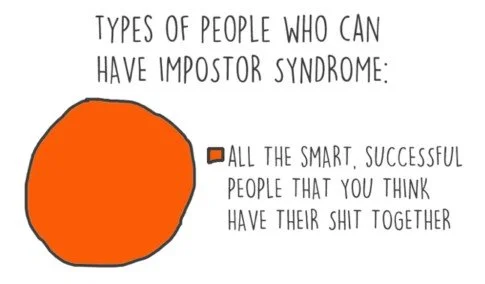
💥Firstly — it’s not a syndrome.
A syndrome is a diagnosed condition or mental disorder. Imposter “syndrome” is neither of those. It is more accurately described as an imposter phenomenon — a psychological experience in which someone fears being exposed as a fraud, despite clear evidence of their competence and success.
Unlike a syndrome, which implies a fixed or ongoing condition, the imposter phenomenon is situational. It is not a personality trait or something people permanently “have.” Instead, it is often triggered by performance pressure, specific contexts, or social and cultural environments.
💫 At its core, the imposter phenomenon reflects difficulty internalising success — particularly when achievements exceed a person’s own expectations of themselves. It can arise when there is a mismatch between someone’s self-concept (how they see their abilities) and the objective evidence of their accomplishments.
💫 It often shows up when personal growth hasn’t been fully internalised — meaning the individual hasn’t yet absorbed or acknowledged how much they’ve developed. As a result, people experiencing imposter feelings may attribute their success to external factors such as luck, timing, or sheer effort, rather than their skills and ability.
💫 This experience isn’t just ordinary self-doubt. While it’s normal to feel unsure when doing something for the first few times, imposter-style self-doubt persists even after repeated success. It’s characterised by ongoing uncertainty despite a proven track record.
It’s also important to recognise that external and institutional factors play a role, particularly for people from marginalised or underrepresented groups. In some cases, imposter feelings can be a rational response to environments where belonging, representation, or psychological safety is lacking.
Imposter feelings are often linked to perfectionism and over-preparation. People may believe that past success was only possible because of extraordinary effort — and that the same intensity must always be sustained — rather than recognising their underlying competence.
Context matters. Feeling like you don’t belong isn’t always an internal problem to “fix.” Sometimes, imposter feelings reflect cultural, organisational, or societal conditions outside an individual’s control.
💫 There are complexities and nuance to imposter phenomenon and addressing it requires more than affirmations and “just be confident” thinking.
💫 A helpful starting point is to shift the language we use — moving away from “suffering from imposter syndrome” (which implies illness or defect) to “experiencing imposter feelings.”
▶️ I’ll be talking more about how we can work with imposter feelings in constructive ways – follow me on LinkedIn Sarah Hardman The Emerging Leader Coach | LinkedIn
or subscribes to my e-newsletter if you are interested.
#imposterphenomenon #impostersyndrome #imposter #selfassuredleader #leadershipcoach #leadership #coaching #selfconfidence